No products in the cart.
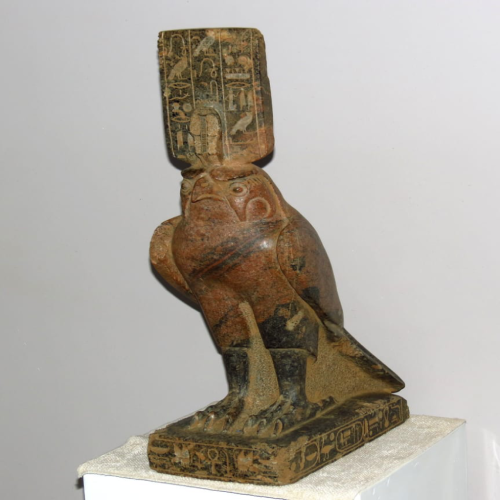
In the early hours of the morning, before the city fully wakes up, a distinct sound begins to rise from within the stone workshops. It is a rhythmic, metallic echo—sometimes sharp, sometimes soft—like a heartbeat carved into granite. Inside Egypt’s sculpture schools, the chisel never feels cold. It carries warmth, memory, and continuity.
Dust rises gently from blocks of basalt and granite, floating in the light like suspended history. In these spaces, unfinished pharaonic faces stare silently from every corner—waiting, watching, becoming. The workshop is no longer just a place of training; it feels like a living archive where time does not move forward, but rather accumulates.
Ancient Egyptian sculpture was never merely craftsmanship. It was a philosophy of permanence, balance, and spiritual presence. Today, sculpture schools carry that philosophy forward, not as theory, but as daily practice—breathing life into stone exactly as it was done thousands of years ago.
In a sculpture school, the first lesson is not how to hold a chisel. It is how to slow down. A young student sits in front of a massive, silent block of stone that seems indifferent to human intention. The master does not rush. Instead, he observes.
Then comes the first teaching—often repeated in silence more than words:
“Do not fight the stone. Listen to it first.”This is where true learning begins. The student gradually understands that sculpture is not an act of force, but a dialogue. The stone has structure, grain, resistance, and rhythm. It responds differently depending on pressure, angle, temperature, and even patience.Over time, the student stops seeing stone as an object. It becomes a presence.Inside Egyptian handmade carving schools, students spend long hours mastering basic yet essential movements: how to position the body, how to stabilize the wrist, how to control pressure, and how to recognize the invisible lines hidden inside the material. These are not just technical exercises—they are forms of awareness training.
The transformation is subtle but profound. The student begins to “feel” before they cut. And that feeling becomes the foundation of all mastery.
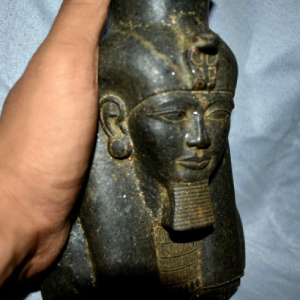
One of the most important lessons inside a sculpture school is not about carving—it is about seeing.A master may suddenly change the lighting in the workshop. A face that looked complete moments ago now appears different under a shifted shadow. The student is asked to observe carefully.This is where sculpture becomes almost philosophical.Light reveals structure, but shadow reveals truth. Ancient Egyptian artists understood this deeply. They designed statues not only to be seen, but to be experienced under changing light conditions—inside temples, courtyards, and sacred corridors.Students learn that a slight indentation can completely alter emotional expression. A subtle curve in the cheek can shift a statue from calm to authority. Nothing is accidental.Over time, they begin to realize that sculpting is not about adding form—it is about revealing what already exists within the stone.
This sensitivity to light and shadow becomes one of the most advanced stages of training, where technical skill transforms into artistic intelligence.
A sculpture school in Egypt is never a silent classroom. It is a living ecosystem. Stone fragments on the floor, half-finished statues standing like ancient guardians, tools scattered like extensions of human intention.Here, learning and production are inseparable. Students do not wait to “graduate” before contributing. They are part of the workshop from day one. They observe, assist, fail, correct, and slowly evolve.The environment resembles the ancient workshops of Memphis and Thebes, where apprentices worked alongside masters in continuous creation rather than structured lessons.This living system ensures that knowledge is not theoretical. It is physical, repetitive, and deeply embodied.The soundscape of the workshop becomes its own language: chisels striking stone, wooden malletsadjusting rhythm, instructors correcting angles, students quietly repeating motions until muscle memory replaces hesitation.This is why Egyptian sculpture schools are not just educational institutions—they are preservation ecosystems.
Beyond teaching sculpture as a craft, these schools carry a much larger responsibility: preserving the identity of ancient Egyptian art.Without structured transmission, centuries of visual language could fade. Proportions, symbolism, and carving methods developed over thousands of years risk being lost in modern simplification.That is why these workshops focus not only on creating art, but on protecting heritage.Modern reproduction of Egyptian artifacts depends heavily on these trained artisans. Every replica, every museum-inspired piece, and every decorative statue begins with a disciplined understanding of ancient aesthetics. It is not imitation—it is continuation.
Through this process, Egyptian handmade carving becomes more than a skill. It becomes cultural memory in physical form.
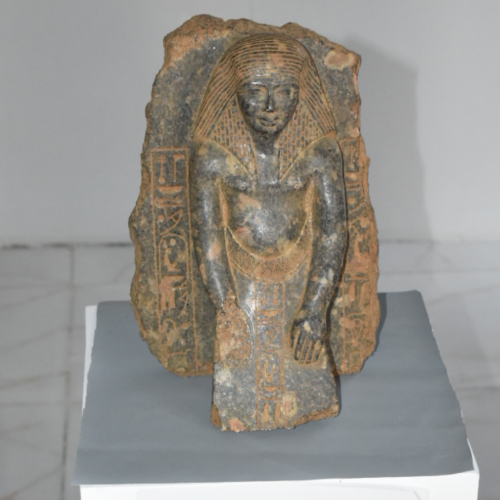
At the end of the day, the workshop slowly quiets. Dust settles on unfinished forms. Tools rest beside stone faces that seem almost alive under dim light.
Students leave carrying fatigue in their hands, but something else in their minds: an unspoken understanding that they are part of a lineage far older than themselves.They are not just learning sculpture. They are inheriting a secretA secret that began thousands of years ago and still survives in every strike of the chisel.In a world increasingly driven by speed and mass production, Egyptian sculpture schools remain rare spaces where time slows down, attention deepens, and human hands still matter.
And within that slowness, the ancient warmth of the chisel is never lost—it is simply passed forward, from one generation to the next.



https://shorturl.fm/RGmYX
https://shorturl.fm/mkHAi
https://shorturl.fm/q6TWR
https://shorturl.fm/ee2b3
https://shorturl.fm/fNJwW
https://shorturl.fm/Fxz2t
https://shorturl.fm/KERJB
https://shorturl.fm/QQpLI
https://shorturl.fm/r7hGU
https://shorturl.fm/o4Wjf
https://shorturl.fm/giExU
https://shorturl.fm/cPRF3
https://shorturl.fm/hX8Xa
https://shorturl.fm/T149X
https://shorturl.fm/tDw0C
https://shorturl.fm/errfU
https://shorturl.fm/yQMxQ
https://shorturl.fm/Ku7ln
https://shorturl.fm/R3U9l
https://shorturl.fm/U5Pnn
https://shorturl.fm/mM7jA
https://shorturl.fm/dQYCb
https://shorturl.fm/gftg5
https://shorturl.fm/yD8BY
https://shorturl.fm/JyMIN
https://shorturl.fm/QAiAz
https://shorturl.fm/SBBd0
https://shorturl.fm/ODlSN
https://shorturl.fm/fzaYj
Подбираю шторы для комнаты и пытаюсь понять, что лучше сочетать по цвету и фактуре. Попалась статья с идеями для создания гармоничного интерьера: https://24-ff.ru/intriguing/sozdanie-idealnyh-shtor-dlya-vashego-interera/
Недавно искал способы сделать небольшую квартиру удобнее без лишней мебели. Нашёл несколько практичных идей по организации интерьера: https://vladimir-golovin-propovedi.ru/furnishings/komfort-v-malenkoj-kvartire/