No products in the cart.
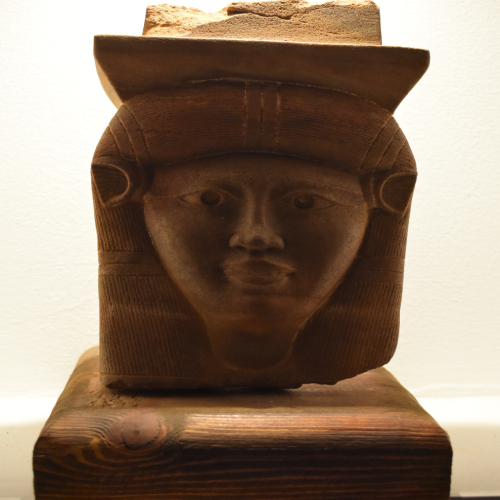
Somewhere inside a quiet workshop filled with the scent of stone dust and aged wood, the sound of a chisel echoes through the air like a whisper from ancient Thebes. A sharp tap… then another, softer and more precise. A silent block of stone slowly begins to reveal a face — regal eyes emerging from shadow, a royal headdress taking shape beneath careful hands, hieroglyphic lines flowing across the surface like messages reborn from temple walls thousands of years old.
Not as mass-produced décor pieces, but as living artistic tributes to one of the greatest civilizations in history. In today’s world of luxury interiors and personalized art, a pharaoh statue is no longer just an ornament; it becomes a statement of identity, heritage, elegance, and timeless power.
From a simple idea sketched on paper to the final polished sculpture standing proudly in a villa, hotel lobby, office, or private gallery, every piece tells a deeply personal story. This is the art of transforming imagination into stone — where ancient Egypt meets modern craftsmanship.
This introduction captures the exact, intoxicating alchemy of bespoke art. It elevates the process from mere manufacturing to a form of modern-day ritual—where an idea is chiseled into reality.
To expand this beautiful conceptual opening into deeply engaging, professional marketing copy or catalog chapters, here is each element developed into a rich, evocative paragraph:
Every masterpiece begins as a whisper of intent. Whether it is a snapshot captured in the fleeting light of a museum gallery, a saved digital image, or a simple, evocative sentence spoken during a consultation, that initial spark is the most vital piece of the puzzle. The design team doesn’t just copy the reference; they decode it. They look past the surface to understand the scale of your space, the architecture that will house the piece, and the exact energy you want it to radiate. This collaborative dialogue transforms a raw concept into a precise visual blueprint, ensuring the final sculpture is tailored entirely to your personal narrative.
Ancient Egyptian sculpture was never passive or merely decorative; it was a highly sophisticated language of symbols where every choice carried cosmic weight. When designing a custom piece, selecting the pose and regalia is tantamount to writing its biography. A forward-striding left foot represents life, progress, and a step into eternity; a seated posture embodies absolute sovereignty and enduring stability. The choice of a crown, the placement of the hands, or the presence of a sacred symbol like the Ankh or the Uraeus cobra isn’t random—it is a deliberate invocation of authority, protection, and divine balance.
Before materializing in stone or bronze, a sculpture must find its emotional anchor among the great archetypes of antiquity. The design phase explores the specific aura the piece should command within your space. Should it feel majestic, colossal, and unyielding like the monuments of Ramses II, commanding immediate reverence? Should it exude the timeless, delicate elegance and serene symmetry of Queen Nefertiti? Or perhaps it demands the sleek, enigmatic, and powerful vigilance of Anubis, guarding your threshold with silent strength? Defining this emotional core shapes every line and shadow that follows.
Long before the first strike of the chisel hits the raw block, the sculpture undergoes its most critical transformation: it is carved within the imagination. In this ethereal phase, the master artisans weigh the physical properties of the chosen medium against the digital renders. They visualize how a beam of morning light will catch the cheekbones of a polished basalt face, how a drop shadow will pool in the deep grooves of a hieroglyphic inscription, and how the texture of the finished surface will feel to the touch. This meticulous mental prototyping guarantees that when the physical sculpting finally begins, the artisans are not guessing—they are simply liberating a vision that already vividly exists.
This text hits the perfect note for a high-end art studio or a luxury design catalog. It beautifully bridges the gap between historical reverence and elite, modern customization.
Here is each element expanded into a rich, immersive paragraph, crafted to captivate collectors and design enthusiasts by emphasizing meticulous craftsmanship and bespoke luxury:
The face is where the sculpture establishes its psychological connection with the viewer. In the sketching phase, the artist treats the eyes, brow, and lips not just as features, but as conduits of an ancient aura. Guidelines are drawn to capture the classic Egyptian “look of eternity”—eyes that gaze slightly upward and outward into the horizon rather than at the viewer, conveying timeless wisdom. Whether the client desires a smile of serene benevolence or a sharp, commanding gaze of absolute authority, these subtle micro-lines are refined on paper until the face projects the exact spiritual weight required.
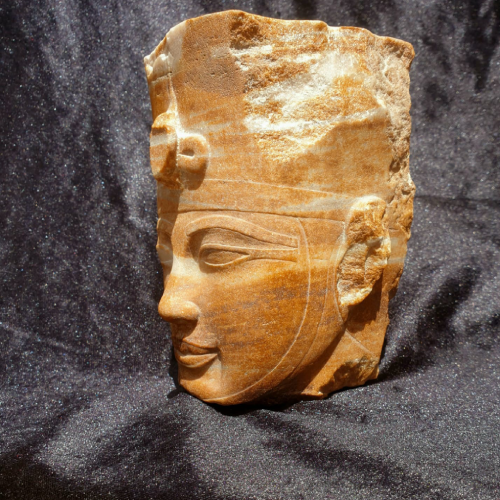
A pharaonic crown is a towering statement of identity and cosmic alignment. During sketching, the proportions of the crown—whether it is the sleek Khepresh (blue crown), the majestic Nemes headdress, or a specialized deity crown—are mathematically balanced against the silhouette of the face. The design team ensures that the sweeping curves and sharp angles harmonize perfectly with the shoulders, preventing the upper mass from overpowering the torso. Every fold of the cloth or line of the crown is meticulously plotted to create a striking silhouette that commands attention from any distance.
Hieroglyphs are never treated as mere background patterns; they are sacred formulas that give the piece its voice. In this phase, the layout of the text is carefully integrated into the sculpture’s architecture—running down the back pillar, framing the sides of a throne, or wrapping around the base. The sketches dictate the precise rhythm, spacing, and style of the glyphs. Artisans determine whether the carvings will be sunk low into the material to capture deep shadows, or raised in high relief to catch the light, turning the inscription into a tactile piece of history.
The base is the structural and aesthetic foundation that anchors the entire narrative of the statue. Sketching out the base requires a flawless understanding of weight, stability, and spatial presence. A wider, monolithic base lends the sculpture a sense of unshakeable, monumental permanence reminiscent of temple ruins, while a sleeker, stepped base offers a more contemporary, elevated elegance. The design plots the exact surface area needed to support the physical weight of the material while providing a perfectly framed stage for royal cartouches and dedications.
Long before the stone is quarried or the bronze is cast, its skin is mapped out on paper. The sketch phase dictates the interplay of textures across the statue’s body.
The artists plan where the material will be polished to a mirror-like, silky smoothness—such as the soft contours of the face or torso—and where it will retain a raw, chiseled, or matte texture to evoke antiquity. This deliberate contrast creates a rich tactile experience, making the final piece feel less like a manufactured product and more like a living artifact.
An exceptional statue is dynamic; its expression changes as light moves across its surfaces. During the sketching phase, lighting is treated as a three-dimensional sculpting material.
Designers map out how overhead spotlights will cast dramatic shadows beneath the brow and cheekbones, enhancing the statue’s majestic intensity, or how soft ambient lighting will wash over the curves of the polished stone. By visualizing these light paths early on, the sculpture is engineered to look mesmerizing at any time of day, under any lighting layout.
A bespoke statue does not just sit in a room; it commands it. The sketching phase considers the piece’s final destination—be it a sunlit atrium, a moody private study, or a grand entrance hall.
The artists draft the piece within a simulated layout of the client’s space to ensure perfect sightlines. This guarantees that whether a guest views the statue from a distance upon entering, or up close while walking past, the sculpture maintains a flawless, balanced, and breathtaking architectural presence from every single angle.
“True luxury does not lie in owning what is rare, but in creating what is entirely unique.”
When a client requests bespoke modifications—such as elevating the posture by a fraction to increase its structural grandeur, sharpening the jawline for a more formidable presence, or seamlessly weaving their own family legacy into a custom royal cartouche—the sketch becomes a living dialogue.
In the realm of high-end Egyptian décor, this level of personalization is never a mere afterthought; it is the vital spark that elevates a replica into an original masterpiece. It bridges the gap between the ancient pharaohs and the modern collector, ensuring that the finished artwork carries not just the spirit of antiquity, but the distinct soul and vision of its owner.
This text serves as an exquisite guide for collectors and designers, perfectly illustrating that material selection in luxury art is never purely functional—it is an emotional and aesthetic choice.
Here is each material option expanded into a rich, immersive paragraph, crafted to articulate how the medium completely redefines the voice and presence of the sculpture:
Natural stone—whether it is the warm, porous texture of limestone or the dense, unyielding strength of basalt and granite—is the literal fabric of Egyptian history. Choosing natural stone gives the sculpture an immediate archaeological gravitas, making it feel less like a modern creation and more like an authentic artifact recovered from the sands of Luxor. The subtle imperfections, organic veining, and earthy tones ensure that no two pieces are identical. It is the definitive choice for spaces that demand an atmosphere of sacred heritage, ancient wisdom, and a physical connection to the eternal monuments of the pharaohs.
Marble is the language of aristocratic refinement and timeless luxury. When sculpted into pharaonic forms, marble transforms the rigid geometry of ancient art into a fluid, luminous masterpiece. Its unique ability to allow light to penetrate slightly beneath the surface—a quality known as subsurface scattering—gives the statue a soft, ethereal glow that feels almost alive. Perfect for pristine interior galleries, formal reception spaces, or high-end residential projects, a marble statue introduces a sleek, polished sophistication that bridges classical antiquity with elite contemporary living.
Bronze carries an undeniable weight of authority and a commanding, theatrical presence. As a material favored by kings and emperors throughout history, it possesses a deep, metallic warmth that instantly commands any room it occupies. The casting process allows for a beautiful interplay of deep shadows and gleaming highlights, which can be further enhanced through custom patinas—ranging from an antique, oxidized green to a rich, dark obsidian sheen. A bronze pharaonic statue is built to endure for generations, making it the ultimate statement piece for grand entryways, corporate boardrooms, or luxury hotel lobbies where it can project power and prestige.
Resin (high-density polymer) is the premier medium of the modern design avant-garde, breaking traditional boundaries of weight, scale, and detail. It allows artisans to capture microscopic levels of detail—such as the intricate weaving of a Nemes headdress, sharp facial geometry, or hyper-precise hieroglyphic inscriptions—that would be incredibly difficult to carve into hard stone. Furthermore, resin offers unparalleled freedom in finishing; it can be flawlessly coated to replicate polished chrome, liquid gold, matte black, or even translucent glass, making it the ideal choice for bold, avant-garde spaces that celebrate ancient iconography through a sleek, 21st-century lens.
Plaster and specialized composite materials offer the perfect marriage of aesthetic flexibility and structural practicality for sophisticated interior styling. These materials are highly receptive to specialized hand-applied finishes, allowing them to convincingly mimic the texture of aged stone or matte gypsum at a fraction of the weight. This makes them uniquely suited for complex architectural installations, such as delicate wall niches, elevated shelving displays, or historical wall reliefs, where the structural load must be kept minimal without sacrificing a single ounce of visual luxury or historical authenticity.



https://shorturl.fm/vucQa
https://shorturl.fm/5VvKA
https://pesnimp3.net/1.html
https://shorturl.fm/nfDzq
https://pesnimp3.net/1.html
https://shorturl.fm/tSpX8
https://shorturl.fm/NoHIG
https://shorturl.fm/gSJom
https://shorturl.fm/4Dd9p
https://shorturl.fm/XyTAr
https://shorturl.fm/UA8Ih
https://shorturl.fm/c0OOa
https://shorturl.fm/NE18v
https://shorturl.fm/txmrS
https://shorturl.fm/nKvM6
https://shorturl.fm/QAP49
https://shorturl.fm/IIWx3
https://shorturl.fm/41OE3
https://shorturl.fm/wWp58
https://shorturl.fm/4uct5
https://shorturl.fm/iMR2h
https://shorturl.fm/1J2c6
https://shorturl.fm/Sw9S6
https://shorturl.fm/b8vCO
https://shorturl.fm/xP9vs
https://shorturl.fm/dgZDL
https://shorturl.fm/KUBjo
https://shorturl.fm/aI2W9
https://shorturl.fm/kIarc
https://addlinks.pro/RG1TY
https://addlinks.pro/a3KAg
https://addlinks.pro/c519F